Wopemarihinge theatre
WPM / 01CHARACTER ANIMATION + RIGGING

A PERFORMANCE-LED RIGGING STUDIO

Give the character
something worth
pushing against.

Wopemari builds expressive character systems from the inside out: intention, weight, limits and a rig that lets an animator find a performance rather than merely operate a mechanism.

Enter the rehearsal
INTENTIONWEIGHTRESPONSE
Animator reviewing an articulated character maquette at a dark workbench
THE FIRST CONTROL IS A QUESTION ABOUT PERFORMANCE.

02 / INTENT CARDS

Before the control,
name the impulse.

Choose the kind of performance pressure you are working with. The answer is a direction for a rehearsal, not a label for an entire character.

REHEARSAL NOTE

A thought arrives before the body moves

We look for the small delay, adjustment or held breath that gives the audience a place to read the character’s decision. The rig needs enough resistance to let that thought land.

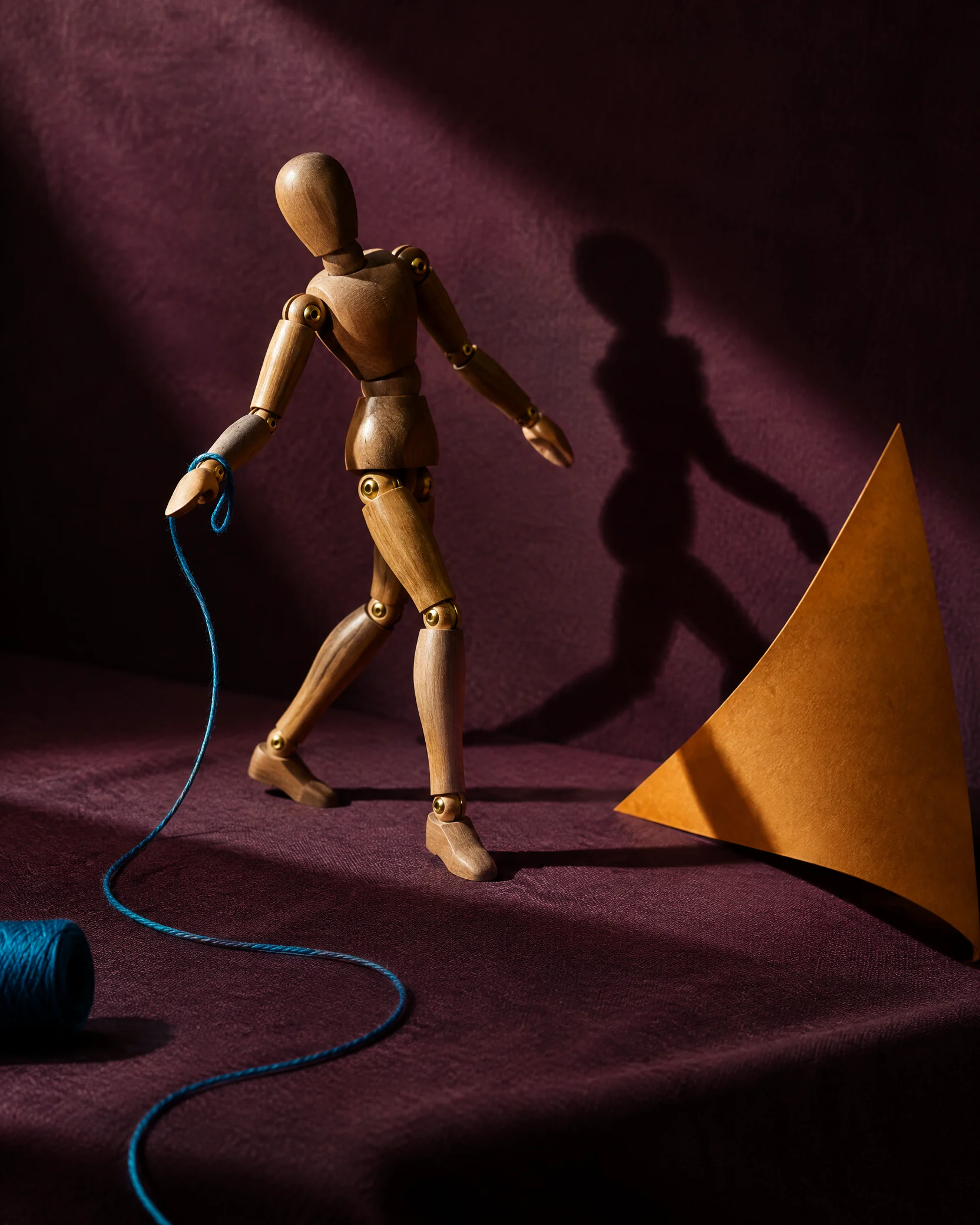
Wooden articulated figure casting a stage shadow
THE PIVOT IS A PROMISE ABOUT HOW A BODY CAN CHANGE.

03 / PIVOT CABINET

Not every joint
needs a louder voice.

Rigging is a choreography of permission. We decide where a character can exaggerate, where it should protect its structure, and which control lets an animator feel the difference without scanning a crowded interface.
SHOULDER: REACH AND RESISTANCE

The shoulder is rarely just a rotation. It changes how a character offers, shields, braces or pulls away from the world.

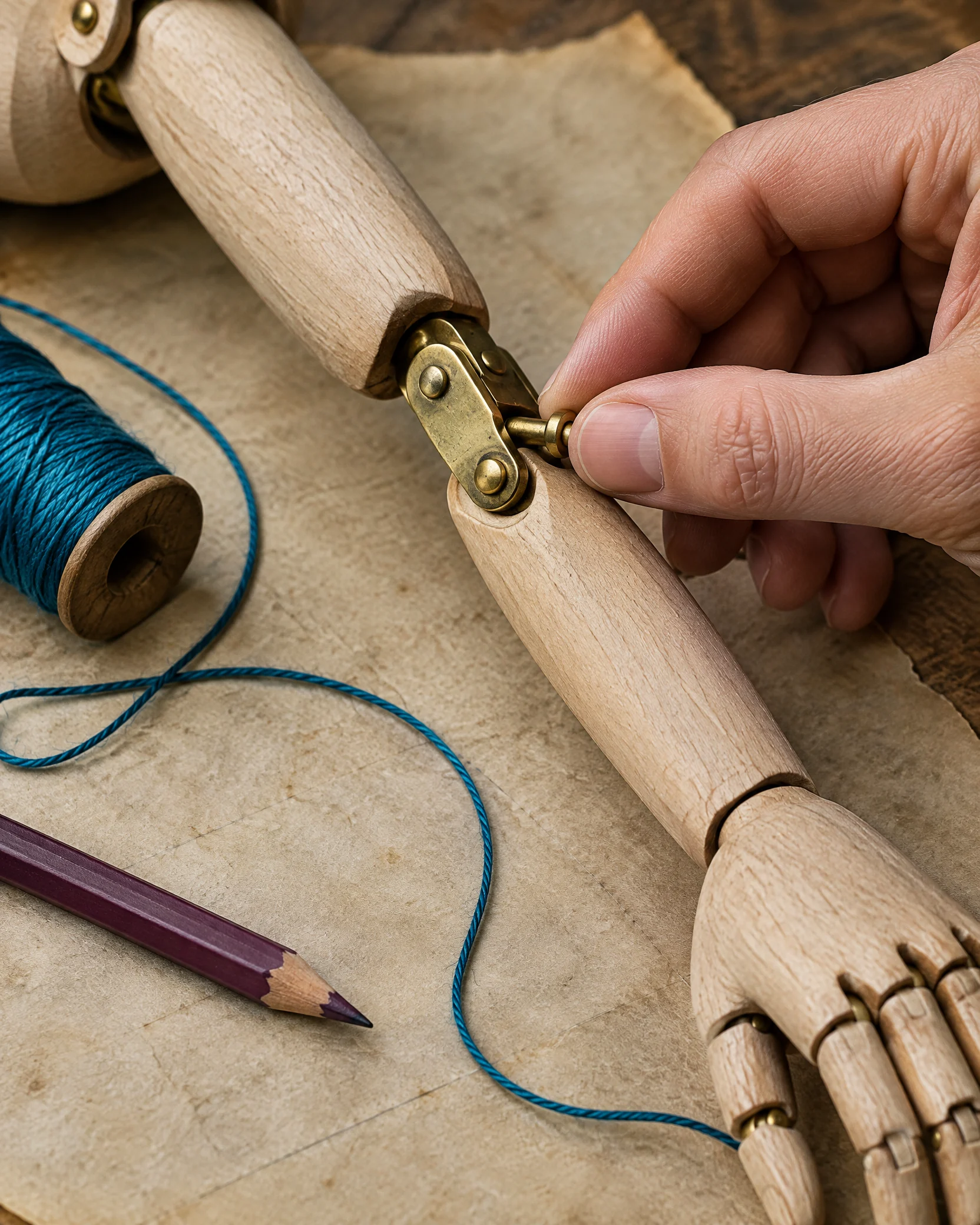
Hand adjusting a brass hinge on an articulated puppet arm
THE DETAIL IS A PERFORMANCE DECISION.

04 / MOTION WALL

A silhouette can
carry a whole scene.

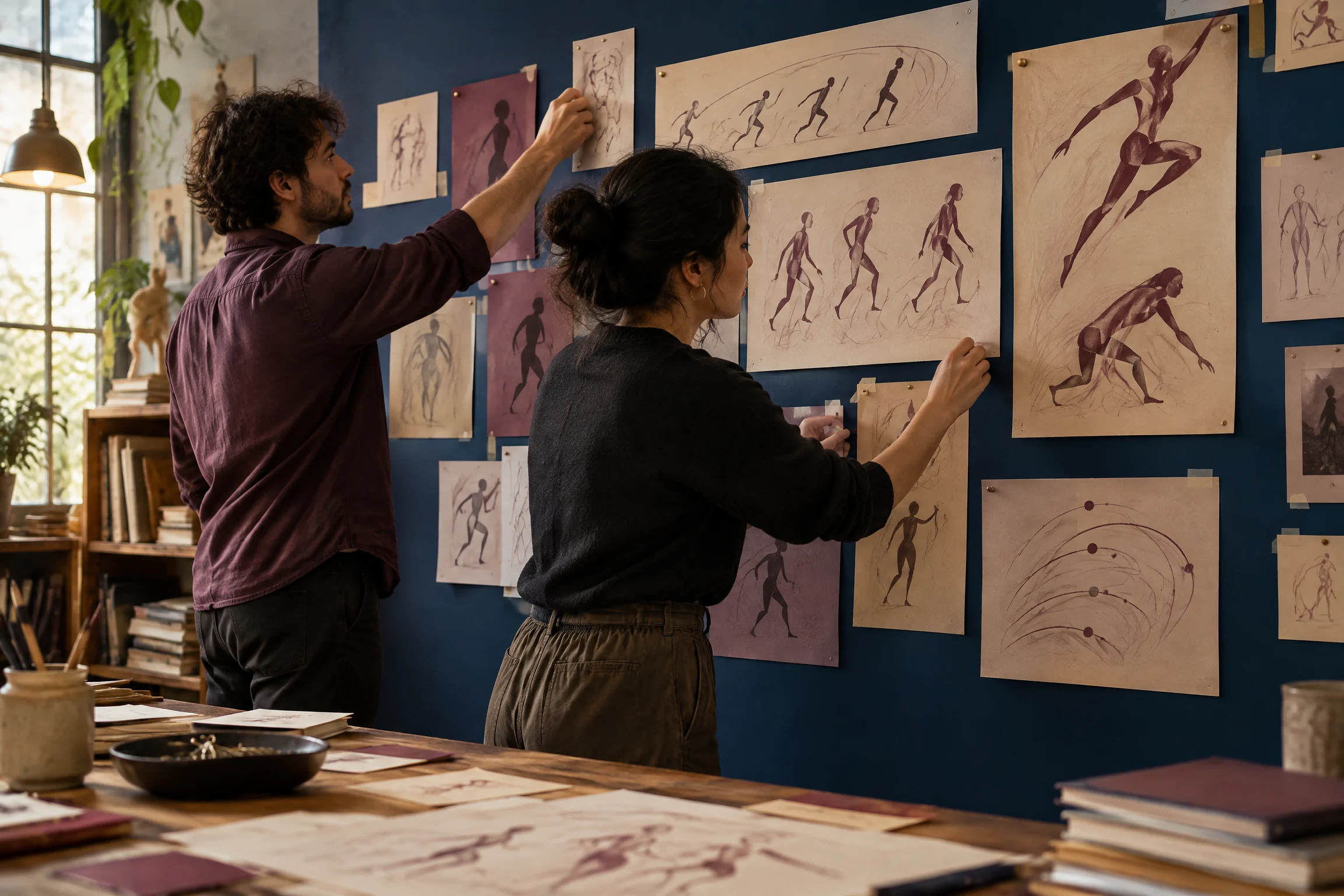
Artists pinning abstract movement studies to a blue wall
DRAW THE PATH BEFORE YOU POLISH THE SURFACE.
A

Read the line

Find the directional arc that lets the audience follow the action through a busy frame.

B

Protect the beat

Give a change of thought enough time to become visible before the next event arrives.

C

Leave a recovery

Make space for the body to absorb its own action. That is often where character appears.

05 / WEIGHT ROOM

Weight is not
a setting. It is a
conversation.

Move the dial to rehearse the type of physical relationship you want the rig to offer. This is not a simulation; it is a language for discussing what the audience should feel.
FLOATGROUNDPRESS
GROUND / A BODY WITH CONSEQUENCE

Use a clear centre, a readable transfer and a gentle recovery so the character can feel supported without becoming slow.

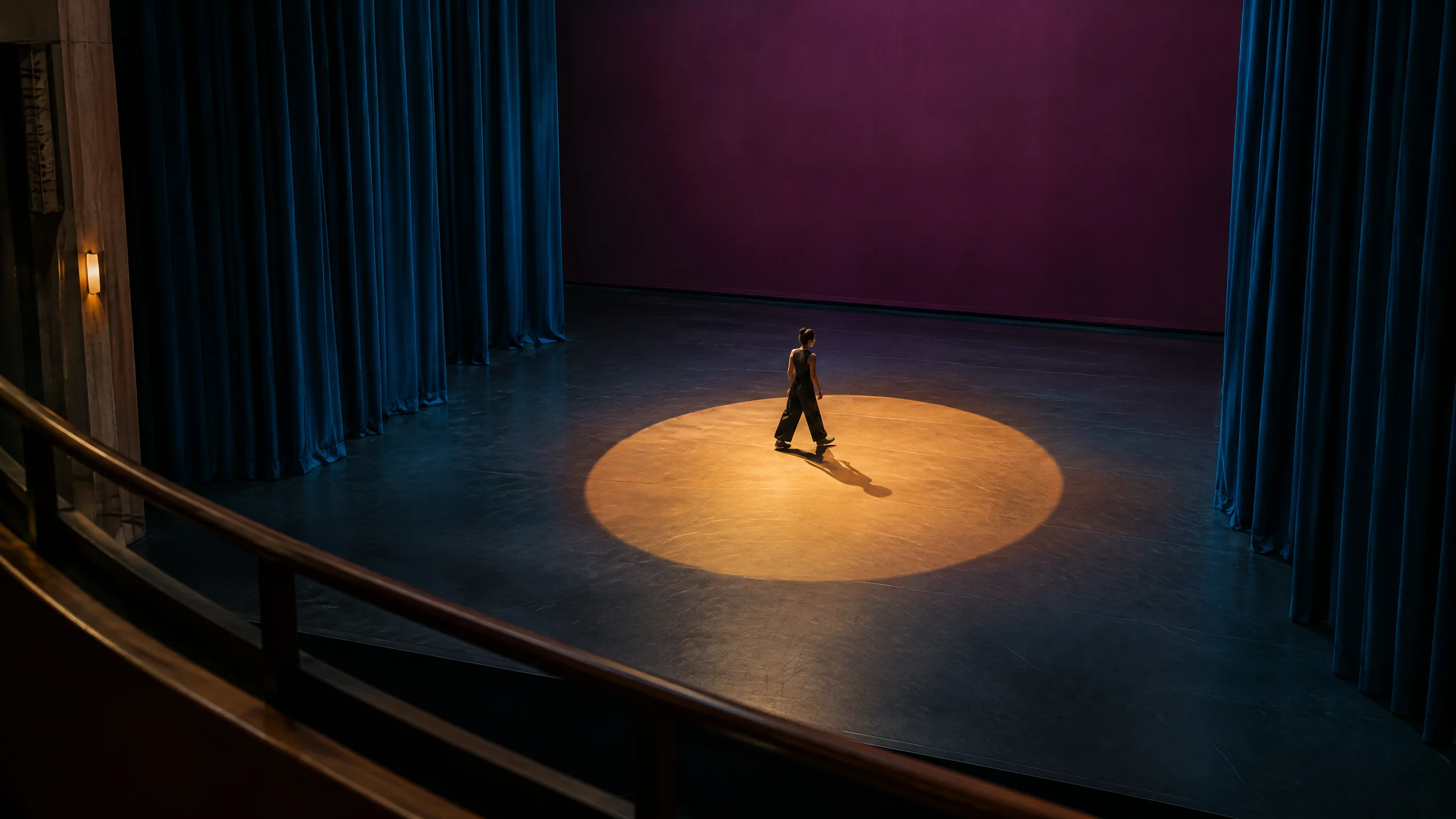
Figure crossing an empty amber-lit rehearsal stage
THE STAGE TELLS US WHAT THE MOVEMENT MUST CARRY.

06 / REHEARSAL WING

Build the test
that can change the rig.

A useful animation test is a small performance with a clear question. It can expose whether the control is missing, whether the body language is too generic or whether a reference needs a different translation.

01

One awkward reach

Ask the character to reach for something it wants but does not quite trust.

Character silhouette reference book and stage objects
REFERENCE IS A STARTING POINT, NOT A CAGE.
02

One held reaction

Let the thought arrive, remain and change the body before the next action.

03

One uneven landing

See whether the feet, spine and recovery tell the same physical story.
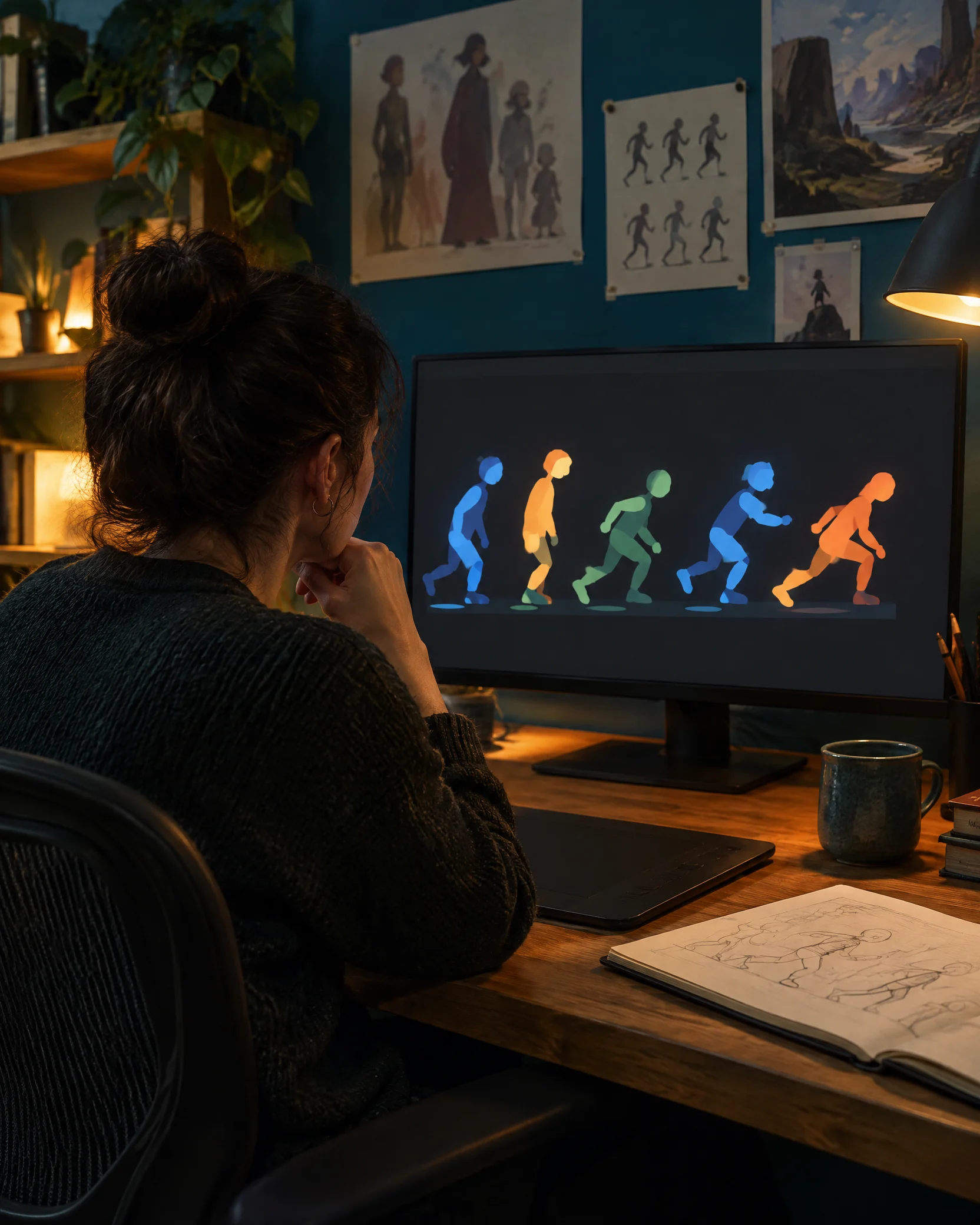
Animator studying a character movement test on a workstation

07 / POSE LABORATORY

Keep the rig
close to the eye.

Controls are only useful when they disappear into the performance. Wopemari reviews the scene from the viewer’s distance as well as the animator’s close-up, so useful mechanics do not create unnecessary noise.

Viewer distanceDoes the thought read?
Animator distanceCan the control be trusted?
Team distanceCan the next person understand the choice?

08 / HANDOFF DRAWER

Leave a character
with a usable backstage.

Control guide

A compact map of what a control does, what it protects and the performance question it serves.

Scene tests

Small files or examples that make the rig’s intended ranges and failure modes visible.
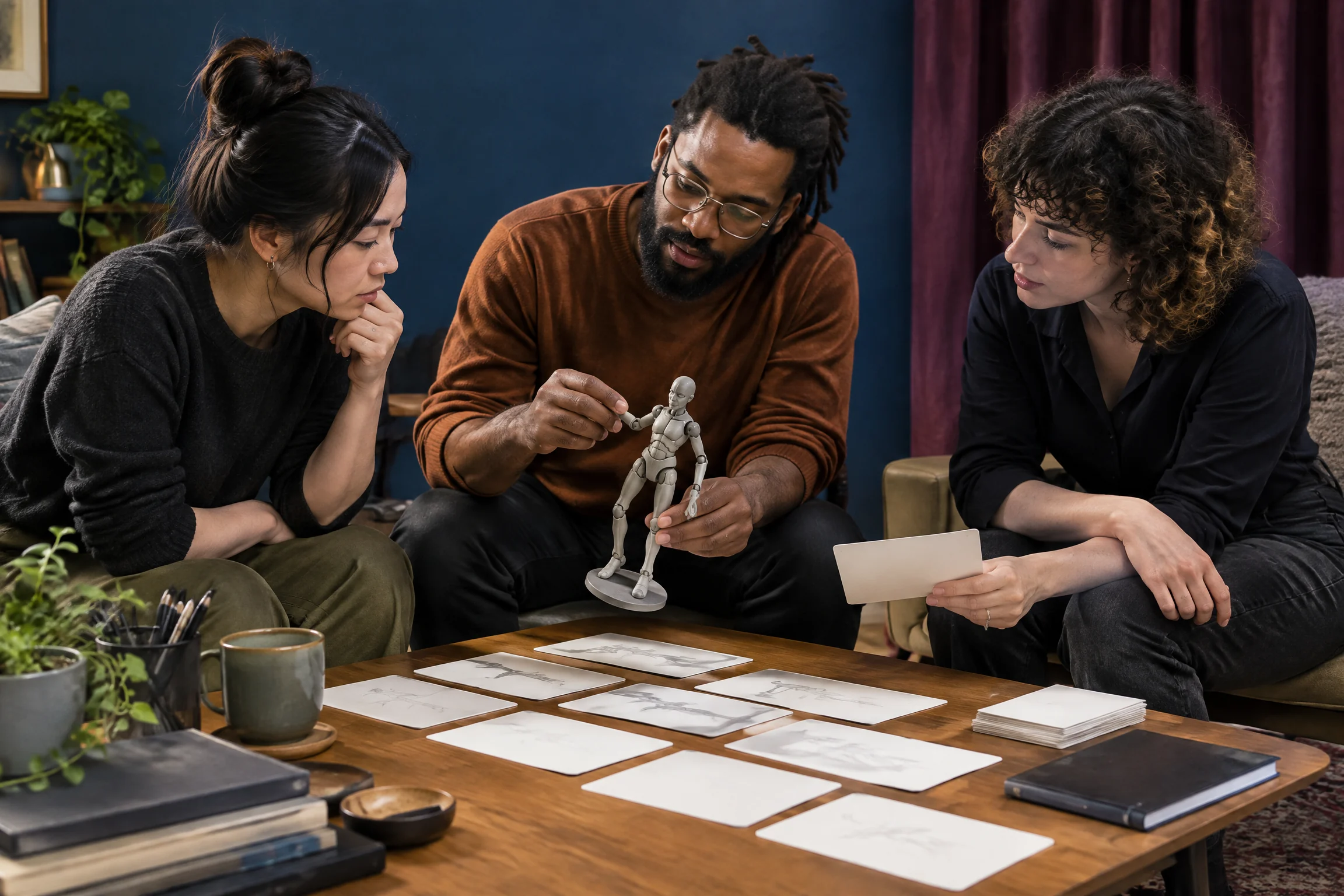
Artists discussing character performance in a warm studio
HANDOFF IS A FORM OF CONTINUING COLLABORATION.

Open notes

Honest limits, next questions and places where a later animator can add judgement.

09 / FAQ PLAYBILL
Questions that
deserve an encore.

Wopemari is useful when a character needs a clearer physical language: a new rig that must support a particular performance, an existing rig that has become difficult to animate, a sequence that needs movement direction or a handoff that requires more than a control list. The best fit begins with a scene, an intention and a real creative constraint—not a generic request for more controls.

Yes, reference can be a valuable starting point. It helps us notice timing, weight, hesitation, recovery and an action’s relationship to the environment. The goal is not to trace a person or animal mechanically. It is to translate the useful physical idea into the character’s own proportions, history and narrative situation, then test whether it reads on screen.

Often, yes. An initial review can identify the few places where the current system obstructs a particular performance: an unclear pivot, a missing recovery, an overloaded control or a weak relationship between body parts. The appropriate response may be a focused extension, a new test scene, an animation pass or a broader rebuild. The recommendation follows the work’s actual pressure rather than a default preference for replacement.

Bring one character moment that is not yet behaving as intended. A clip, pose sheet, rough scene, control problem, silhouette reference or short description can help, but polished materials are not required. The most useful starting point is an honest account of the performance you want the audience to read and the place where the current process loses that intention.
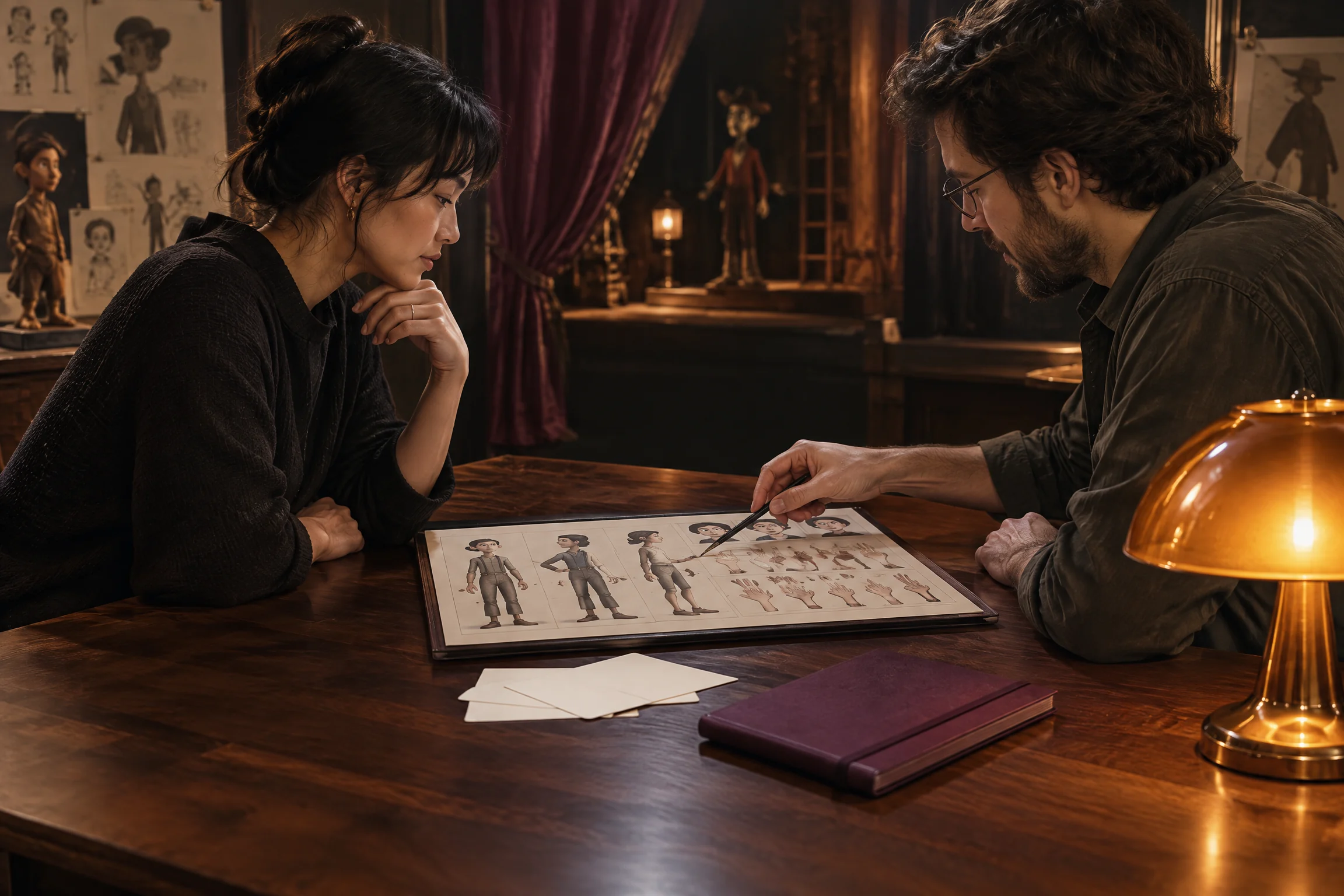
Animation team reviewing a character handoff at a worktable
BRING THE MOMENT THAT IS NOT YET PLAYING.

10 / BOOKING HOUSE

Open the stage
to the unfinished
moment.

Tell Wopemari about the scene, character or system you want to examine. This form is an enquiry only; it does not create an engagement or promise a production schedule.

Quiet theatre workroom at night with closed curtains
WPM / HINGE THEATRE

A good rig leaves
space for the actor.

Return to stage door